Conflict and Violence Prevention & Fight Against Transnational Organized Crime
Burundi and the broader Great Lakes Region are often affected by historical tensions, youth marginalization, poverty, weak border controls, and fragile institutions—all of which create fertile ground for violence and organized crime networks. These crimes transcend borders, but their impacts are deeply felt at the community level: insecurity, exploitation of women and children, forced migration, trauma, and destabilization.
The region’s history of armed conflict, porous borders, and weak justice systems leaves communities exposed to cycles of violence and exploitation. Transnational criminal networks prey on this instability, exploiting vulnerable youth and women. RECOVI understands that peace cannot be achieved or sustained without addressing both internal vulnerabilities and external criminal threats.
In recent years, although Burundi has made political progress, intercommunal tensions, land disputes, political polarization, and youth unemployment continue to drive local conflicts.
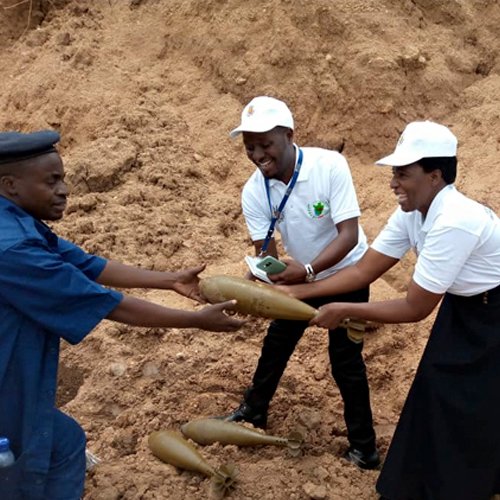
Armed violence, fueled by the proliferation of small arms and light weapons (SALW), remains a serious threat to human security, particularly in rural border provinces like Cibitoke, Bubanza, and Muyinga, which are close to porous frontiers with DRC, Rwanda, and Tanzania.
RECOVI’s approach seeks to localize and complement these efforts by strengthening grassroots resilience, early warning, survivor protection, and cross-border collaboration in partnership with authorities and the Permanent National Commission for fighting against SALWs and international partners.
This program aims to promote peace, safety, and social cohesion in vulnerable communities by preventing local conflicts and violence while actively combating transnational organized crime, such as human trafficking, arms smuggling, drug trafficking, and small arms and light weapons proliferation.
RECOVI recognizes the interconnected nature of local violence and international crime and works to strengthen community-based prevention mechanisms while supporting national and regional responses.
Main Goal:
“To prevent local conflicts and violence while disrupting transnational organized crime, by promoting community resilience, rule of law, and regional cooperation in line with international human rights and peacebuilding standards”.
Proposed Interventions:
1. Conflict and Violence Prevention:
• Peace education campaigns in schools, churches, and local associations.
• Dialogue platforms for youth, elders, women, ex-combatants, and traditional leaders.
• Early warning and rapid response systems for identifying and defusing tensions.
• Capacity-Peace-Building for local peace committees and conflict mediators.
• Youth economic empowerment as a tool for violence prevention.
2. Combating Transnational Organized Crime:
• Community awareness about human trafficking, smuggling, and illicit trade.
• Victim identification, rescue, and referral systems (especially for women and children).
• Advocacy for stronger cross-border law enforcement collaboration.
• Capacity-building for civil society and border communities on recognizing and reporting crimes.
• Partnership with security institutions and international bodies (e.g., UNODC, INTERPOL, local police).
• Prevention of illicit circulation, trafficking, and misuse of small arms and right weapons in targeted communities and border regions
• Promotion of voluntary disarmament and foster a culture of peace and nonviolence
• Contribution to national efforts for arms control, in line with instruments like Nairobi Protocol and the Arms Trade Treaty (ATT).
3. Support for Survivors of Crime and Conflict:
• Psychosocial support for victims of violence, trafficking, and exploitation.
• Legal aid and reintegration services for survivors.
• Safe spaces and temporary shelters for high-risk individuals (especially women and girls).
• Community reintegration of returnees and former gang members.
4. Sustainability and Peace-building integration
• Align with the UN Sustainable Development Goals (SDGs), especially SDG 16 (Peace, Justice and Strong Institutions).
• Encourage local ownership by empowering community leaders, women, and youth to lead initiatives.
• Strengthen institutional capacities of CSOs and local governments for continuity after the project.
• Foster public-private partnerships to fund youth entrepreneurship and social services.
• Create feedback loops and community monitoring systems to track progress and adapt strategies.
5. Cross-Cutting Strategies:
• Gender and human rights mainstreaming.
• Digital tools to report and monitor crime and conflict cases.
• Collaboration with media for responsible conflict reporting and anti-crime messaging.
• Civic education on laws, rights, and peaceful citizenship.
• Engagement with regional networks and anti-trafficking coalitions.
6. Target groups:
• Youth at risk of violence or criminal exploitation
• Women and girls, especially survivors of trafficking or SGBV
• Community leaders and grassroots peacebuilders
• Local law enforcement and civil society actors
• Border communities and displaced populations
OUR PARTNERS
RECOVI values all National, Regional, International Partnerships and Collaborations. We sincere express a splendid gratitude to our past and current partners for they are mostly impacting the change of the World we need through RECOVI's initiatives. The togetherness is highly counted as the only environment of changing from the worst to wellness.



Contact Us
Give us a call, email us or come and visit us Or complete the
form below to send us a message
Location :
Commune Mukaza, zone Rohero – Boulevard de l’Indépendance, Immeuble Gift Center 3ème Etage
Open Hours :
Monday - Friday:
08:00 AM - 05:00 PM
Email :
Call:

Copyright © . All Rights Reserved.